Wednesday, May 6, 2026

Film Event: "Old Forest or Young Meadow -The Marvel of Seeds"


Eastern Box Turtle and Mayapple Fruit

Have you ever noticed that, in no time at all, bare soil suddenly starts sprouting green plant growth? How does that happen? Yes, it's typically because there were seeds in the soil that now germinate and grow. But have you thought about how those seeds got in there in the first place? Where did they originate? 

Plants have evolved over eons to do some pretty amazing things. They can't move from the place where they're rooted, so (if they're spore- or seed-producing plants) in order to propagate, they must disperse their propagules to a suitable place where they can grow to be new offspring. There are a number of methods plants use to accomplish that dispersal. Some are commonplace, such as when seeds just fall to the ground, or are carried by the wind. Others are a bit more involved, as when seeds have hooks that attach them to passing animals (or us!), to be taken some distance away.

But there are even more "ingenious" ways some plants get their kids out of the house. That's what our film Old Forest or Young Meadow -The Marvel of Seeds is all about. There are some really fascinating things to see in the variety of seed dispersal schemes, and we thoroughly enjoyed finding and witnessing many of them. We'd like you to see them as well. We guarantee you'll see some things you've likely never witnessed, even from common plants found near home.    


And you can do that on Tuesday evening, May 19, 2026, when we'll present the film at the Bishops Corner Senior Center in West Hartford, CT.  Co-sponsored by Traprock Ridge Land Conservancy, the Sustainable West Hartford Commission, and New England Seed Company.

Screen time is 7:00pm. 

Registration is required: please sign up here, at Traprock Ridge Land Conservancy.


We'll hold a Q&A session following the film. And each attendee will receive a free packet of seeds from New England Seed Company.


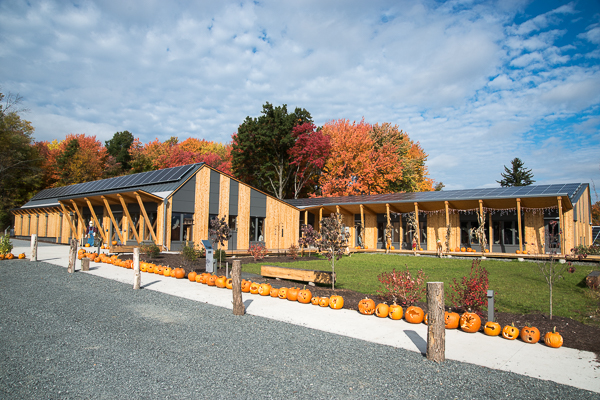
Bishops Corner Senior Center is located at 15 Starkel Rd. West Hartford. 


Thursday, April 16, 2026

"Proforestation" film screening premiere event


For a long, long time, we humans have been harvesting forests for wood products, clearing forests for agriculture and development, and otherwise manipulating forested lands. There's not much left that hasn't been disturbed by us. Does that matter? Well, yes, it does. 

Why should we leave any forests alone, where trees will sprout, grow, and eventually die, only to "just go to waste"? Because unmanipulated "old growth" forests are highly evolved and adapted to the long-term conditions where they grow. Trees are long-lived plants; their lives span the typical ups and downs of temporary changes in climate. 

Old forests are superior to young forests in providing filtered, clean water and air. With their ability to transpire water vapor via photosynthesis, large, contiguous old forests propagate precipitation across the land, keeping streams and rivers flowing, ground water abundant, and aquifers at optimal levels.  


Just as we need "working" forests to supply harvestable timber, we likewise need substantial "wildland" forests around the globe to maintain life-supporting conditions, not only for us, but for wildlife of all kinds as well. This is not an option; it is a requisite for sustaining human, animal, and plant life on this planet. Where humans have eliminated forests, deserts result. Where forests still exist but are over-harvested, the land is likely on a downward spiral toward forest simplification and eventual desertification.


Our latest film, "Proforestation: Letting Forests Grow Old", discusses the need for allowing forests to live to their ecological potential, to provide us with all their benefits.

The film's premiere local screening will be presented as part of Real Art Ways' "Science On Screen" series, on Saturday, April 25, 2026.

Due to ongoing renovations at Real Art Ways, the event will be held at the Connecticut Science Center theater, in Hartford, CT. 

The program begins at 3pm, when Professor Susan Masino of Trinity College will give a short talk and slide presentation prior to the film, which begins at 3:30. A Q&A session will follow the film. 

Seating will be General Admission; tickets and info are available at the Real Art Ways website. 

The Connecticut Science Center is located in Hartford, CT, at 250 Columbus Boulevard. Directions and parking info are available on their website.
 
 
Connecticut Science Center


Wednesday, April 15, 2026

White Pine Film Event in Simsbury, CT


Eastern White Pines

 If you look at a forested hillside almost anywhere in the northeast, you'll probably see eastern white pines poking up through the canopy and towering over the surrounding trees. We tend to take those pines for granted; they're just part of the natural landscape.

But 400 years ago, stands of huge, primeval New England white pines were highly valued by the English Crown, the finest being axe-marked as the “King’s pines”. They were sorely needed for ship masts, and were the primary motivation in sending colonists to these shores, eventually sparking the American Revolution. Their importance didn't wane post-revolution; on the contrary, they were integral to the building of much of the eastern United States through the following century. It's a cogent story.
 

"King's Pine"

And that story is told in "Eastern White Pine - the Tree Rooted in American History", our one-hour documentary film that uses vintage images, current footage, and soaring aerial views to tell the 4-century tale of the pine's critical contribution to America's founding and history. You may be surprised to learn how the white pine is woven through the fabric of this country's formation.

Eastern White Pine Logs


Today, the white pine still is economically important, but it's much appreciated for its ecological role too. A number of wildlife species are dependent on pines; some are described in the film, from birds to bears. 

On Thursday evening, April 23, 2026, the film will be shown at the Simsbury (CT.) Public Library, co-sponsored by Simsbury Grange, Simsbury Land Trust, Real Art Ways, and the library. 

In celebration of Earth Day and Arbor Day, the event begins at 6pm with a reception featuring pine needle tea and other treats.

Admission is free, although pre-registration (here) is required. 

There will be a Q&A session following the film.


Thursday, March 12, 2026

"The Salamanders of New England" film events


Salamanders, as a group, are among the most abundant vertebrates in New England, yet, despite their numbers, they're seldom seen. That's because most of their life is spent either underground or underwater. 

Most of us who spend time in the woods here, especially after a rain, have likely been delighted to come upon a glowingly orange little critter known as a red eft, the juvenile phase of the Eastern Red-Spotted Newt. After hatching from eggs and developing as larvae underwater, the efts move onto land to typically spend several years in this juvenile stage before returning to the water as adults (when they're then no longer called efts).

Red Eft


Two other of the more-familiar salamander species are the Redback and Spotted salamanders, the former often being found under logs, and the latter being known for crossing roads as they migrate to vernal breeding pools on rainy, early spring nights.
 
Redback salamander, with eggs


Spotted salamander


But other than these, most people probably seldom, if ever, encounter the other nine salamander species of New England, let alone witness the complete life cycle of any salamander; there are peculiar things that go on inside some salamander eggs!

And Connecticut has the distinction of being the only state in New England where the Northern Slimy salamander has been found. 


Northern Slimy salamander
 

This is the time of year when we'll be seeing those Spotted salamanders (and others) surfacing from their underground retreats and migrating across the forest floor and roads to their vernal breeding ponds. So it's an opportune time to view our "Salamanders of New England" film.

All 12 New England salamander species will be featured, with scenes we promise you've likely never witnessed. There will be a Q&A session following the film, and UMass herpetologist Alan Richmond (retired) will be with us to answer all those questions you're bound to have. 

We'll be presenting the film in two upcoming events.


Hitchcock Center
Hitchcock Center for the Environment

The first will be at the Hitchcock Center for the Environment in Amherst, MA, on Thursday, April 2, 2026, at 6pm. Admission is free and open to all, but seating is almost full and registration is required, here


The second event will be at the Simsbury (CT) Public Library on Monday, April 13, 2026, at 6:30pm. This free event is open to all and is co-sponsored by the Simsbury Grange, Simsbury Land Trust, Real Art Ways, and the library. Pre-registration is required at the Simsbury Public Library website. 


Mudpuppy
Mudpuppy


Monday, March 9, 2026

"Beaver Family Life" film event in Amherst, MA


Our Beaver Family Life film portrays one beaver family's daily autumn routines as they prepare a food supply to survive the coming winter, and follows them through winter and into spring and summer, as the family size increases. 

We'll also see a pair of yellow-bellied sapsuckers raise their young of the year. And gray treefrogs capture caterpillar meals around the pond. A number of other inhabitants are highlighted too.

You can read more of the film's story in a previous post here

On Monday evening, March 23, 2026, we will present the film at the Hitchcock Center for the Environment in Amherst, MA. The event is co-sponsored by the Amherst Jones Library. 

Admission is free and open to all; if you'd care to make a donation to support the Hitchcock Center, that would be much appreciated.

The film will be shown at 6pm, followed by a Q&A session.

The Hitchcock Center is located at 845 West Street (Rt 116), Amherst, MA.


Thursday, March 5, 2026

"The Great Big Giant Sequoia Scam" film


Rob Lewis (on Substack: The Climate According to Life) notified us of a new documentary film titled "The Great Big Giant Sequoia Scam" that exposes what's going on in some of California's groves of Giant sequoia, namely, Kings Canyon National Park, Sequoia National Park, and Sequoia National Monument. 

Everyone who cares about these trees and parks, and all our public lands, should watch this 24-minute film to see what's going on there at the hands of the US Forest Service and National Park Service, following fires in those groves.

The film was a joint effort of The John Muir Project, the Our Public Lands Podcast, Western Watersheds Project and Wilderness Watch. It can be seen on Youtube here


Saturday, February 21, 2026

New film: "Proforestation: Letting Forests Grow Old"


The hurried, hectic life many of us lead today tends to make us take for granted the physical world we live in. Do we think about what made Earth a planet that fosters life, unlike the other barren planets around us? Somehow, water appeared in great quantity here, which certainly is the basis of life. But just the presence of water alone was not enough to fully support the complex life forms that eventually arose. Forests evolved over hundreds of millions of years to produce the environmental conditions that give us a place to thrive: an atmosphere with oxygen; fresh water; food; shelter; a moderate climate; fuel; etc. Had forests not come about, we might not exist either.

Over a relatively short human history, we've managed to rise to the top of the species list (at least from our own perspective). But, with our success, our numbers have inflated wildly, creating huge demands for resources and dangerous overconfidence in our knowledge. We've become highly disconnected from and destructive of that which underpins our existence. Civilizations have come and gone, many of which have exploited forests to the point where the forests disappeared, followed quickly by the civilizations. 

The over-exploitation of global forests is ongoing. More and more land is being degraded and deforested, putting it on the descent toward non-forest and even desert-like conditions. The Amazon rainforest. The Congo Basin. Parts of the Americas. Even boreal forests are coming down. 


Pristine stream in old-growth forest


Forests give us life, but not just any forest is good enough. To keep Earth as a place where we can continue to live in relative comfort requires regions of Nature-managed, old forests around the globe. Only time creates forests where natural biological, evolutionary processes can recover and play out. These forests created
livable terrestrial conditions over eons in the first place, and evolved forests are the only thing that we know is capable of maintaining those conditions. Evolution cannot be planted, but tree plantation "forests" and “working” forests are useful in providing resources. They are not adequate for sustaining complex life - they are never given the chance to evolve in place over generations. They lack the genetic "wisdom" of a forest community.

Scientists are not unaware of all this, and many recognize that a growing trend toward managing and manipulating everything must be reversed, without delay. We don't want to (and can't) stop harvesting all forests; but it's essential that we recognize that we need forests for the life-sustaining conditions without which we cannot survive. Large, contiguous old forests bring fresh water to land from the oceans; they provide oxygen; they keep streams and rivers flowing; they cool, regulate, and moderate the climate and keep heat-trapping gases out of the atmosphere; they regulate winds; they are wildlife habitat; and much more.


In 2019 a new scientific term was coined to describe the simple concept of allowing some forests to grow old (and thereby provide us with their benefits)... "proforestation". It's not a complicated idea; it just means "letting forests be managed by Nature, to adapt and evolve as they always have". There can still be "working" forests, where we manage them for the resources we need. But we have just as great a need (actually... greater) for substantial areas of natural, unmanaged forests, including in the Northeast. Proforestation of the Adirondacks since the late 1800’s is a remarkable example of temperate forest recovery still underway, and happens in any area that is managed with an intent to prioritize natural processes in the forest, i.e. a “Wildland.”

We have just completed a new film that explores this topic, titled "Proforestation: Letting Forests Grow Old." It features some of New England's remaining old-growth forests. Three scientists speak on the subject: an ecologist, and two co-authors of the term "proforestation". 

You can view the film on the New England Forests Youtube channel. 


Friday, February 13, 2026

Film Event: "Old Growth Forests - Nature's Biotic Water Pump"


Last April, we presented the film "The Return of Old Growth Forests" at the Simsbury (Connecticut) Public Library; it was the first film in the New England Forests America 250 series. 

In that film, the Biotic Pump theory was described by its co-author, atmospheric physicist Anastassia Makarieva, who described how large, contiguous, old natural forests bring fresh water inland from oceans during photosynthesis by transpiring water vapor into the air. That water vapor leads to precipitation, creating a feedback loop that keeps water vapor coming inland and the land hydrated... forests bring water to themselves, and us. That's part of the Earth's hydrologic cycle. Furthermore, with contiguous forest cover, water is effectively "pumped" across continents. As a result, not only do we get a terrestrial fresh water supply, but our climate is regulated, stabilized, and moderated as well. But that biotic pump mechanism can be shut down by degraded, interrupted, or eliminated forests. 

On Monday, February 23, 2026, we are pleased to be showing the second film in the New England Forests America 250 series, which is a follow-up to that film entitled "Old Growth Forests - Nature's Biotic Water Pump". 

For decades now, we've been hearing considerable discussion of how greenhouse gases, particularly CO2, cause climate change. But what has been almost totally ignored is the effect that alteration of land cover has on our climate. It's not just about carbon, and never was.

Keeping the land hydrated is crucial to terrestrial life, but many cultures have destroyed the very thing that makes the land habitable... forests! Places such as Egypt, Africa, Australia, and others, have become deserts because their forests were cut to the point where the hydrologic cycle was disrupted, then the soil dried out and could not recover on its own (ie, it became a "landscape trap"). That destructive behavior is still happening today in places like Canada, America, Chile, and the Amazon, putting those places also on the trajectory to desertification. 


Change to land cover, especially the cutting and removal of forests, is referred to as "the second leg of climate change". The greenhouse gas effect is just one half of the climate story; land cover change is the other half, and just as important. 

This story is told in much more detail in "Old Growth Forests - Nature's Biotic Water Pump". Anastassia Makarieva has become world renowned for her continuing research on the critical role of forests; in this film, she adds more information about the biotic pump mechanism. 

This event, co-sponsored by Simsbury Land Trust, Simsbury Grange, the Simsbury Public Library, and Real Art Ways, is free and open to all, and will begin at 6:30pm. A Q&A session will follow the film. 

Saturday, December 20, 2025

"Old Forest or Young Meadow -The Marvel of Seeds" film event


Have you ever noticed that when someone dumps a truckload of soil, or bulldozes the ground, in no time at all that bare soil suddenly starts sprouting green plant growth? How does that happen? Yes, it's typically because there were seeds in the soil that now germinate and grow. Have you thought about how those seeds got in that soil in the first place? Where did they originate? 

Plants have evolved over eons to do some pretty amazing things. They can't move from the place where they're rooted, so (if they're spore- or seed-producing plants) in order to propagate, they must disperse their propagules to a suitable place where they can grow to be new offspring. There are a number of methods whereby plants can accomplish that dispersal. Some are commonplace, such as when seeds just fall to the ground, or are carried by the wind. Others are a bit more involved, as when seeds have hooks that attach them to passing animals (or us!), to be taken some distance away. 

Exploding lupine seed pod
A lupine seed pod explodes
Wind-dispersed clematis seed


But there are even more "ingenious" ways some plants get their kids out of the house. That's what spurred us to make the film Old Forest or Young Meadow -The Marvel of Seeds. There are some really fascinating things to see in the variety of seed dispersal schemes, and we thoroughly enjoyed finding and witnessing many of them. We'd like you to see them as well. We guarantee you'll see some things you've likely never witnessed, even from common plants found near home.    


And you can do that on Saturday evening, January 3, 2026, when we'll present the premiere theater screening of the film at the Real Art Ways theater in Hartford, CT.  Screen time is 5pm. (This date and time are tentative as of this writing). 

The theater is in the historic Underwood Typewriter Offices building in the Parkville neighborhood of Hartford, at 56 Arbor Street. See the Real Art Ways website for details.

We'll hold a Q&A session following the film. 


Wednesday, December 10, 2025

Did Native Americans Manage the Forests in New England?

It's a long-held belief that Native Americans actively managed forests in New England in pre-settlement times, mainly by burning them to clear the understory of brush. They presumably would have done this to promote the growth of berry- and nut-yielding species; to improve hunting conditions; and to increase visibility of advancing enemies. 

This belief is often used to contradict the idea that old growth forests that returned here following the retreat of the latest glaciers roughly fifteen thousand years ago were not pristine, primeval, nature-managed forests. And if it is true that these forests were heavily manipulated by man, then today's call to let nature manage much of our forest land is unwarranted and unnecessary.

What does current science say about this topic? 

The following is republished from The Conversation.


Native people did not use fire to shape New England’s landscape

Old-growth forests prevailed in New England for thousands of years. David Foster, CC BY-ND
Wyatt Oswald, Emerson College; David R. Foster, Harvard University, and Elizabeth Chilton, Binghamton University, State University of New York

An interpretive sign stands at the edge of the Montague Plains Wildlife Management Area, a 1,500-acre state conservation property in central Massachusetts. It explains the site’s open land vegetation has been shaped by “millennia of fire” – and that the recent exclusion of fire has led to declines in this habitat and the species that call it home. It goes on to explain that fire is being reintroduced to the site through controlled burns “to reinvigorate fire-adapted species.”

The prescribed burning at Montague Plains and dozens of other conservation areas across New England is based on the belief that, for thousands of years, Native Americans cleared forests and used fire to improve habitat for the plants and animals they relied upon. The use of fire as a management tool is just one example of a broader shift in how ecologists and conservationists have come to think about the impacts of ancient humans. Increasingly, researchers believe Native people controlled ecosystems across much of the globe, from boreal regions to the Amazon, including many areas formerly deemed pristine.

Our new research, published in the journal Nature Sustainability, tests this human-centric view of the past using interdisciplinary, retrospective science. The data we collected suggest, in New England, this assumption is erroneous.

Sediment tells the story

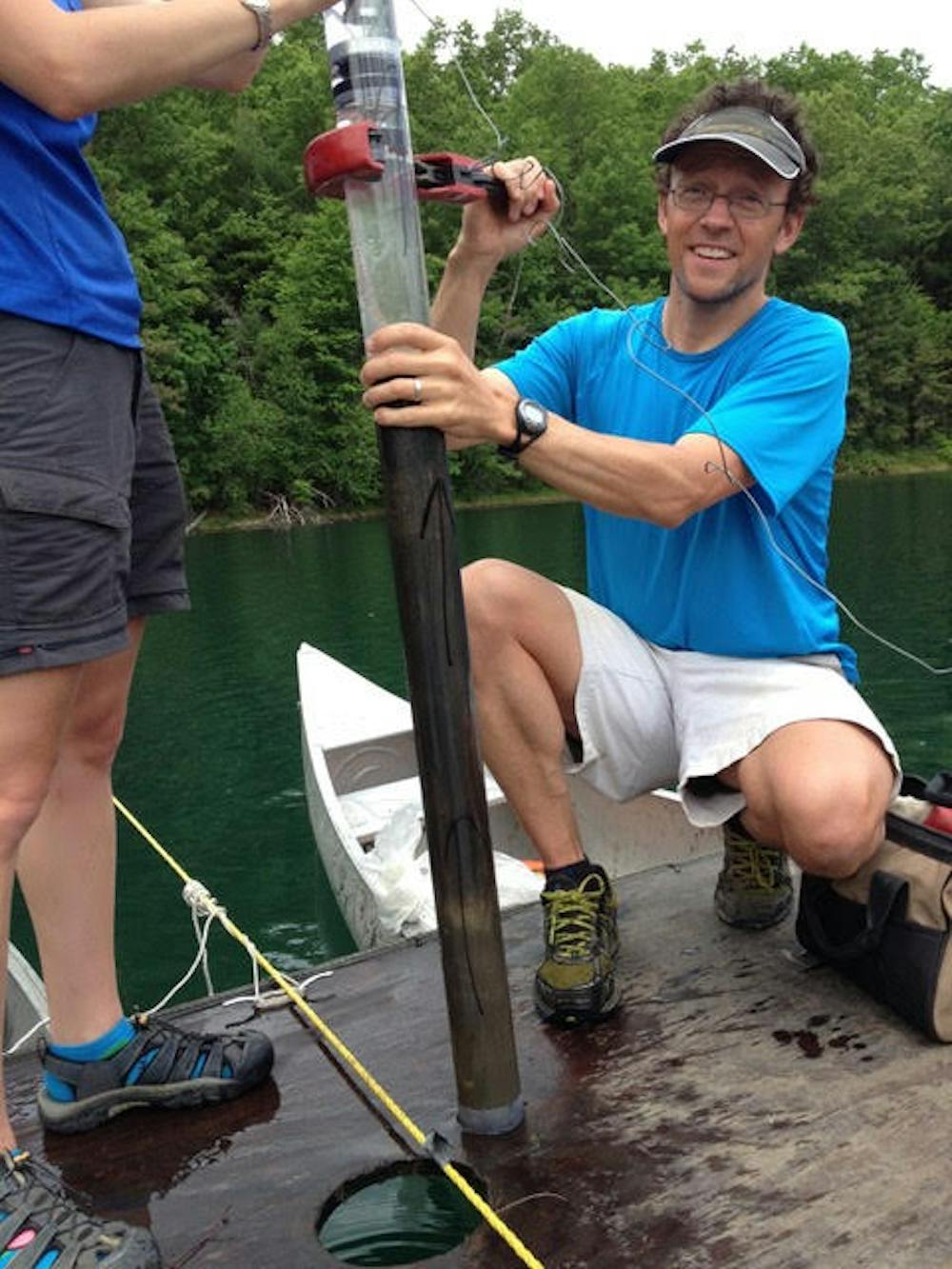
In the field of paleo-ecology, researchers take advantage of the fact that, over time, the bottoms of lakes and ponds fill up with mud. Using a hand-driven device, scientists can collect a cylindrical core of the sediment and then use radiocarbon dating to determine the age of the mud at different depths. Over the last century, scientists have collected sediment cores from hundreds of lakes around the world, enabling them to reconstruct past environments and ecosystems.

Paleo-ecologist Bryan Shuman collecting a sediment core from Green Pond, central Massachusetts. Wyatt Oswald, CC BY-ND

Our team of paleo-ecologists and archaeologists collected sediment cores from 23 ponds across southern New England. We analyzed ancient pollen grains, fragments of charcoal and clues about past water depth, all preserved in the mud, allowing us to create a record of vegetation, fire and climate over thousands of years.

We then compared this ecological and environmental history with data from more than 1,800 archaeological sites along the coast from Cape Cod to Long Island, including the islands of Martha’s Vineyard, Nantucket and the Elizabeth Islands. These areas historically supported the greatest densities of Native people in New England and today are home to the highest concentrations of endangered species and rare open land habitats in the region.

Our study contradicts the theory that people had significant ecological impacts in southern New England before European arrival. Instead, it reveals that old forests, shaped by climate change and natural processes, prevailed across the region for thousands of years.

Native populations in southern New England peaked at two times during the last several millennia: 5,000-3,000 years ago, during what archaeologists call the Late Archaic Period, and 1,500-500 years ago, a period known as the Middle-Late Woodland. During those times when Native populations were relatively high, we found no evidence for forest clearance, elevated use of fire, or widespread agriculture. Interestingly, fire activity was high only 10,000-8,000 years ago, a period that was substantially drier than today, with low human populations.

Of course, the indigenous people of New England utilized and relied on a wide variety of natural resources: they hunted, fished, foraged, and cultivated some edible plants. Pre-Colonial societies were complex, widespread and large, with populations in the tens of thousands. But the evidence suggests they didn’t use fire to open large swaths of the landscape for agriculture. Rather, over more than 10,000 years, these highly adaptable people shifted activities seasonally across the landscape, taking advantage of a wide range of resources and exerting limited, and most likely very localized, ecological impacts overall.

From dense forests to more open land

So, if Native Americans didn’t clear forests and create open lands across southern New England, how and when did the grasslands, shrub lands and open forests in existence today originate?

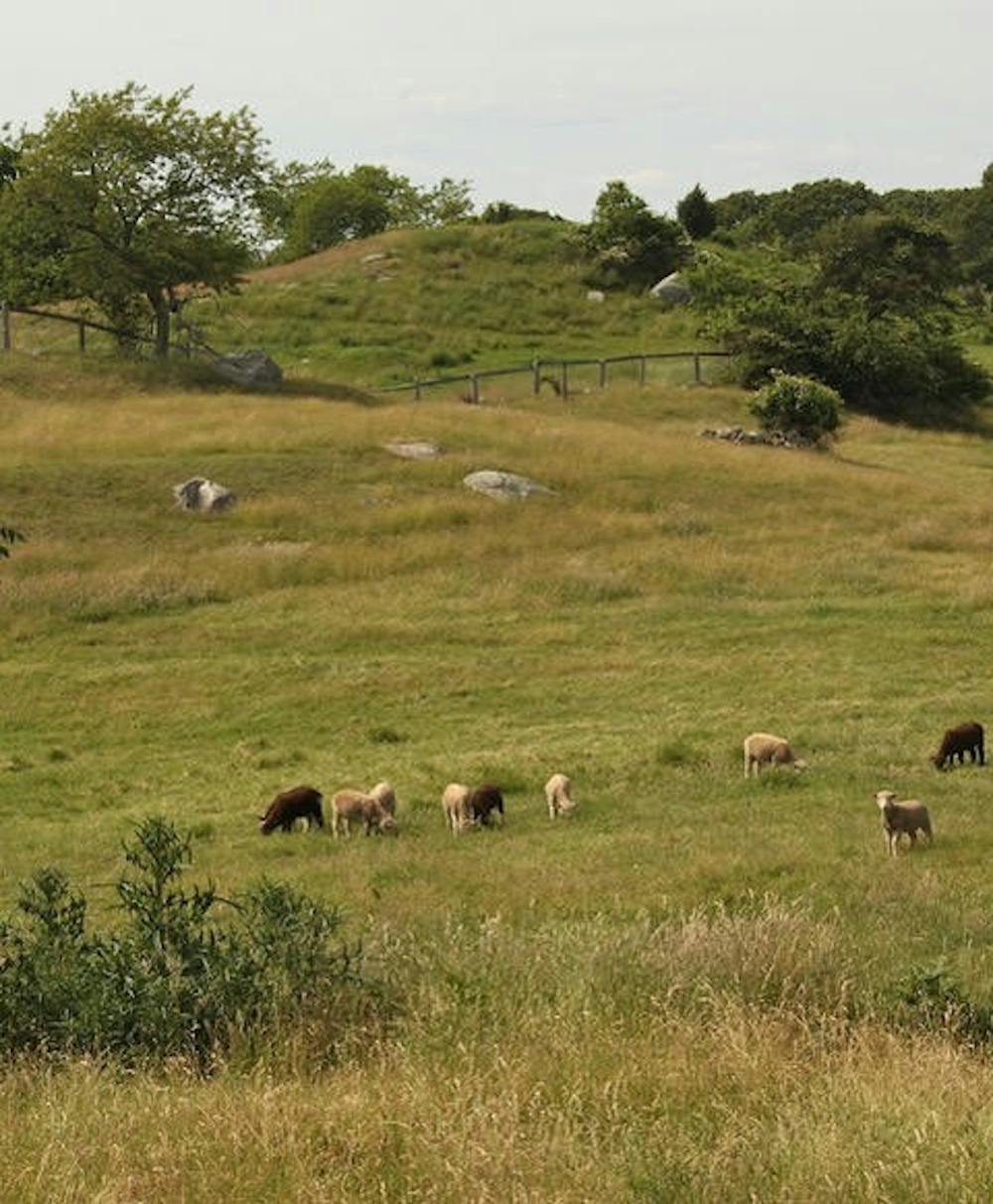
When we analyzed the mud in our study ponds, we found the obvious signature of forest clearance by 17th-century European colonists. Pollen from forest species declined, while pollen from agricultural and weedy species, like ragweed, increased abruptly. This evidence clearly shows New England’s open land habitats owe their existence to Colonial European deforestation and agriculture, especially sheep and cattle grazing, hay production, and orchard and vegetable cultivation in the 18th and 19th centuries.

Sheep grazing on Martha’s Vineyard. David Foster, CC BY-SA

This retrospective research should cause some conservationists to reconsider both their rationale and tools for land management. If the goal is to emulate the conditions that existed prior to the arrival of Europeans, land managers should allow New England forests to mature with minimal human disturbance. If the goal is also to maintain biodiverse open land habitats, like Montague Plains, within the largely forested landscape, managers should apply the Colonial-era agricultural approaches that created them nearly 400 years ago. Those tools would include mowing, grazing and cutting woody vegetation – but not burning.

[ You’re smart and curious about the world. So are The Conversation’s authors and editors. You can get our highlights each weekend. ]The Conversation

Wyatt Oswald, Professor of Environmental Science, Emerson College; David R. Foster, Director, Harvard Forest, Harvard University, and Elizabeth Chilton, Dean of the Harpur College of Arts and Sciences and Professor of Anthropology, Binghamton University, State University of New York

This article is republished from The Conversation under a Creative Commons license. Read the original article.

Thursday, November 27, 2025

Beaver Family Life film event at Simsbury CT


On Friday evening, December 5, 2025, we will present our new film, Beaver Family Life, at the historic Simsbury, CT, Grange hall. The film portrays one beaver family's daily autumn routines as they prepare a food supply to survive the coming winter, and follows them through winter and into spring and summer. 

You can read more of the story in a previous post here.

Admission is free and open to all; if you'd care to make a donation to support the Grange, that can be done at the hall and would be much appreciated.

The film will be shown at 7pm, preceded by a social hour with free refreshments at 6pm. A Q&A session follows the film.

Pre-registration is requested, at the Simsbury Public Library website. 

The Grange hall is located at 236 Farms Village Road, West Simsbury, CT 06092.


Sunday, November 16, 2025

Beaver Family Life - a new film

One year ago, on a cool autumn day, I came upon an opportunity to film two beavers adding to their winter food cache. They were taking down numbers of saplings, hauling them out of the woods to their food cache in the pond. Larger trees were felled for their branches, while the bark of their trunks was consumed on the spot. The beavers would alternate that activity with the chore of insulating their lodge with a fresh coat of mud dredged up from the pond bottom. They were active virtually all day, every day, as well as during the night.


Beaver gnaws on a tree at night


It appeared that there were just these two adult beavers living in the small pond. But not long after beginning daily visits to the pond, I saw a third beaver, a young one that had been born that spring. Things were becoming a little more interesting. The following day, I saw that there was a second youngster too. Great! This is getting better! And then the very next day, a third youngster appeared. I now had a family of five beavers to watch, tirelessly working together to build their winter food supply. I had never been this lucky before, despite having spent several years filming beavers. 

This family was not overly wary of my presence, which made it so much easier to film them in their daily routines. As long as I was downwind of them, they went about their business. Seeing that they were often making trips about 150 feet upslope from the pond to harvest saplings, I sat on a small rock up there one day to hopefully get a head-on shot of one of them coming up the hill. It didn't take long. I was not expecting that yearling beaver to come right to my feet! It was indeed a thrilling experience, but, admittedly, quite concerning as well. I thought about those chisel-sharp teeth. I had no idea how it would react if and when it discovered my feet at its nose. Stopping abruptly, it paused for a couple seconds, then (thankfully) turned left and continued on its way, making a half-circle to end up at a sapling several yards uphill behind me. 


Young beaver at my feet
A young beaver at my feet

In short order, the sapling came down. The beaver began dragging it down the slope, directly toward me. Still sitting on the rock, I didn't want to startle it, and strained to turn only my head to watch it. I was again concerned about the beaver's approach and possible reaction. When it was within a couple feet of me, sapling in mouth, I nervously but quietly said to it "whoa, go around." It froze, staring at me. I stood up, preparing to scram. Apparently it was now as concerned about me as I was of it, because it dropped the sapling and took off at high speed down the slope, running right across my feet! It quite literally high-tailed it, galloping far faster than I had ever witnessed a beaver run before. It made it to the water in probably record time. I think I was nearly as wet from perspiration as it was from immersion! It maybe was a memorable experience for the young beaver too. That was enough for me for that day; I went home, relieved and happy.  

I spent five or six days a week there through fall, winter, and the following spring and summer. 

In spring, I saw evidence that the adult pair likely had a new litter of young in the lodge. Mom was gathering ferns and hauling bunches of them to the lodge, no doubt to feed young. 


Beaver with ferns
A beaver brings ferns to the lodge


Then, one day in late June, a new beaver kit made its appearance in the pond. It was noticeably smaller than its siblings born a year earlier, and remained close to the lodge. This was the only member of this spring's litter, but it increased the family size to six individuals. They all were a joy to watch develop, as the youngsters learned skills from the parents. I had never heard beavers vocalize like these before; that alone made the time with them well worthwhile. There were amusing instances, and they kept me entertained for the months I spent learning about their lives. 

Beaver adult with kit


During my time at the pond, there were of course other intriguing lives to observe. In early spring, a mated pair of yellow-bellied sapsuckers were at work excavating a nest cavity in a dead aspen at the edge of the pond. Being sapsuckers, they were also busy chipping out their distinctive rows of small holes in a maple tree a few yards away, from which they'd lap up sweet sap. The young they raised turned out to be the most entertaining bird nestlings I've seen. 

Male yellow-bellied sapsucker


Just as intriguing as the beavers' and sapsuckers' lives were, I was fortunate to witness and film the complete life cycle of tiny Harvester butterflies, from adult to egg to larva to pupa to adult; another new experience. The larvae of butterflies dine on various plants, but this species does not; it is North America's only carnivorous butterfly- the caterpillars gobble up woolly alder aphids. They do this right under the "noses" of ants that otherwise carefully protect the aphids from predation, in order to "farm" them for the sweet honeydew liquid they excrete.

Harvester butterfly, emerged from chrysalis


And it seemed to be a banner year for gray tree frogs around the pond; at times their mating trills commanded attention, echoing off the surrounding wooded slopes to the point where no other sounds were noticeable. Each time their chorus began, I couldn't help but smile, it was so energizing.

Gray tree frog, trilling


It was a good year.

Beaver Family Life is available on the New England Forests Youtube channel.


Monday, October 27, 2025

Beaver Pond Wildlife film event

We always enjoy showing the Beaver Pond Wildlife film series at local venues. Audiences are enthusiastic, appreciative, and typically have numerous questions afterwards.

On Friday, November 7, 2025, we will be screening Part 5 ("Fall to Winter") of the Beaver Pond Wildlife film series at the Grange Hall in West Simsbury, CT. Parts 1 through 4 were shown over the spring, summer and early fall.

This event wraps up the 5-part series of films spanning a year's time at typical New England beaver ponds, which showcases the great array of wild animal and plant life found in this habitat. The films are scheduled to coincide with what you can expect to see at northeastern beaver ponds at that time of the year. Each contains scenes that probably most people have never witnessed in the wild.


A New England beaver pond in autumn

In Part 5, we'll see the dramatic change of colors from summer greens to autumn's fiery reds and glowing golds, as the bounty of summer quickly wanes. All wildlife is now focused on the priority of surviving the coming winter. Some have migrated to warmer climes, or soon will
. Some are preparing to hibernate. Others are stockpiling as much food as they can to ensure they'll have enough to survive until spring. 

Some of the scenes we'll see include: 

-birds such as hawks and falcons, bluebirds, chickadees, cedar waxwings, and others, dealing with the first snowfall;

-beavers in their ice-covered pond, harvesting trees, working on lodges and food caches.


-otters in the snow, and eating fish on the ice; 

River otter eating fish


-a muskrat finding food, on and below the ice; 

-actual sounds of beavers vocalizing in an icy lodge;

-the history of our beaver populations; 

-the overall ecology of beaver pond habitats, and the benefits they provide to a wide range of plant and animal species;

-and so much more!


The program will be held at the Simsbury Grange hall, 236 Farms Village Rd, W. Simsbury, CT.   

Doors open at 6pm for socializing and snacks, and the film begins at 7pm. As always, there will be a Q&A session following the film.

Admission is free, but donations to the Grange are appreciated. 

Pre-registration is requested, but not required. Pre-register at the Simsbury Public Library website. 

Saturday, September 20, 2025

Beaver Pond Wildlife film event

The Simsbury Grange hall in West Simsbury, CT, is the place to be on Friday evening, October 3, 2025. We'll be screening Beaver Pond Wildlife Part 4: Mid-Summer to Fall. This event is the fourth in a 5-part series of films showcasing the great array of wild animal and plant life found at New England's many beaver ponds. 

The showings of this series are scheduled to coincide with what you can expect to see at northeastern beaver ponds at that time of the year. Each contains at least a few scenes that probably most people have never witnessed in the wild.


In Part 4, osprey chicks are now fledging and taking their first flights around (and into) the pond. 

Osprey on nest


A flooding stream is trouble for the beaver family. 

A black bear discovers the beaver lodge.

Newly fledged kingfishers learn hunting skills.

Kingfisher with frog
 

And young red-shouldered hawks have left their nest and are on their first hunts.

We'll see why jewelweed is also called "touch-me-not", and how hummingbirds pollinate cardinal flowers.

Did you know North America's only strictly carnivorous butterfly is found here?

Painted and snapping turtle eggs are now hatching underground, and the tiny hatchlings struggle to emerge from their nests.

Beavers groom each other, and build their food supply for the coming winter.

And much, much more!


There will be a Q&A session with filmmaker Ray Asselin following each film.


Part 5 will cover fall into winter, and is scheduled for November 7. 

The events will be held at the Simsbury Grange hall, 236 Farms Village Rd, W. Simsbury, CT.  Doors open at 6:00 for socializing and snacks, and the film begins at 7. 

Admission is free, but donations to the Grange are appreciated.

Pre-register at the Simsbury Library website.


Saturday, May 24, 2025

Film event: "Beaver Pond Wildlife Part 3”

This is a very active time of year at beaver ponds. Many wildlife species are at the height of their reproductive cycles and there's a lot that can be seen now.

Beaver Pond Wildlife Part 3 - Early Summer will be shown on Friday evening, June 6, 2025, at the Simsbury Grange hall in West Simsbury, CT. This event is the third in a 5-part series of films showcasing the great array of wild animal and plant life found at New England's many beaver ponds. 

The films are scheduled to coincide with what you can expect to see at northeastern beaver ponds at that time of the year. Each contains scenes that probably most people have never witnessed.


Mink in beaver pond

In Part 3, we'll finally see that red-shouldered hawk we heard calling in Part 2. We'll go underwater to see how a number of intriguing creatures live, such as the larval stage of dragonflies, and many others. The significance of adult dragonflies in the lives of birds will be revealed. Rare footage will give insight to some surprising bullfrog behaviors- thought you knew what they eat? Well, brace yourself. 

We'll see closeups of how beavers maintain the dam. A mink is on the hunt. Otters prowl the pond. And much more.


Redwing blackbird harasses Red-shouldered hawk


There will be a Q&A session with filmmaker Ray Asselin following the film.

Parts 4 and 5 will cover late summer to winter, and are scheduled for October 3 and November 7, respectively. 

The events will be held at the Simsbury Grange hall, 236 Farms Village Rd, W. Simsbury, CT.  Doors open at 6:00 for socializing, and the film is at 7:00 pm.

Admission is free, but donations to the Grange are appreciated.

You can pre-register at the Simsbury Library website.