Salamanders, as a group, are among the most abundant vertebrates in New England, yet, despite their numbers, they're seldom seen. That's because most of their life is spent either underground or underwater.
Most of us who spend time in the woods here, especially after a rain, have likely been delighted to come upon a glowingly orange little critter known as a red eft, the juvenile phase of the Eastern Red-Spotted Newt. After hatching from eggs and developing as larvae underwater, the efts move onto land to typically spend several years in this juvenile stage before returning to the water as adults (when they're then no longer called efts).
.jpg) |
| Red Eft |
 |
| Redback salamander, with eggs |
 |
Spotted salamander
|
But other than these, most people probably seldom, if ever, encounter the other nine salamander species of New England, let alone witness the complete life cycle of any salamander; there are peculiar things that go on inside some salamander eggs!
And Connecticut has the distinction of being the only state in New England where the Northern Slimy salamander has been found.
 |
| Northern Slimy salamander |
This is the time of year when we'll be seeing those Spotted salamanders (and others) surfacing from their underground retreats and migrating across the forest floor and roads to their vernal breeding ponds. So it's an opportune time to view our "Salamanders of New England" film.
All 12 New England salamander species will be featured, with scenes we promise you've likely never witnessed. There will be a Q&A session following the film, and UMass herpetologist Alan Richmond (retired) will be with us to answer all those questions you're bound to have.
We'll be presenting the film in two upcoming events.
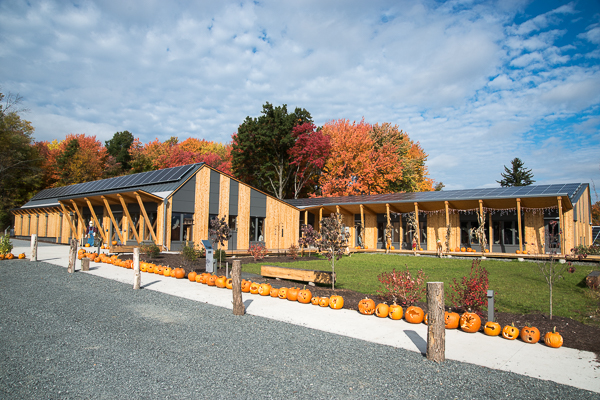 |
| Hitchcock Center for the Environment |
The first will be at the Hitchcock Center for the Environment in Amherst, MA, on Thursday, April 2, 2026, at 6pm. Admission is free and open to all, but seating is almost full and registration is required, here.
The second event will be at the Simsbury (CT) Public Library on Monday, April 13, 2026, at 6:30pm. This free event is open to all and is co-sponsored by the Simsbury Grange, Simsbury Land Trust, Real Art Ways, and the library. Pre-registration is requested at the Simsbury Public Library website.
 |
| Mudpuppy |