Have you ever noticed that when someone dumps a truckload of soil, or bulldozes the ground, in no time at all that bare soil suddenly starts sprouting green plant growth? How does that happen? Yes, it's typically because there were seeds in the soil that now germinate and grow. Have you thought about how those seeds got in that soil in the first place? Where did they originate?
Plants have evolved over eons to do some pretty amazing things. They can't move from the place where they're rooted, so (if they're spore- or seed-producing plants) in order to propagate, they must disperse their propagules to a suitable place where they can grow to be new offspring. There are a number of methods whereby plants can accomplish that dispersal. Some are commonplace, such as when seeds just fall to the ground, or are carried by the wind. Others are a bit more involved, as when seeds have hooks that attach them to passing animals (or us!), to be taken some distance away.
A lupine seed pod explodes
Wind-dispersed clematis seed
But there are even more "ingenious" ways some plants get their kids out of the house. That's what spurred us to make the film Old Forest or Young Meadow -The Marvel of Seeds. There are some really fascinating things to see in the variety of seed dispersal schemes, and we thoroughly enjoyed finding and witnessing many of them. We'd like you to see them as well. We guarantee you'll see some things you've likely never witnessed, even from common plants found near home.
And you can do that on Saturday evening, January 3, 2026, when we'll present the premiere theater screening of the film at the Real Art Ways theater in Hartford, CT. Screen time is 5pm. (This date and time are tentative as of this writing).
The theater is in the historic Underwood Typewriter Offices building in the Parkville neighborhood of Hartford, at 56 Arbor Street. See the Real Art Ways website for details.
It's a long-held belief that Native Americans actively managed forests in New England in pre-settlement times, mainly by burning them to clear the understory of brush. They presumably would have done this to promote the growth of berry- and nut-yielding species; to improve hunting conditions; and to increase visibility of advancing enemies.
This belief is often used to contradict the idea that old growth forests that returned here following the retreat of the latest glaciers roughly fifteen thousand years ago were not pristine, primeval, nature-managed forests. And if it is true that these forests were heavily manipulated by man, then today's call to let nature manage much of our forest land is unwarranted and unnecessary.
An interpretive sign stands at the edge of the Montague Plains Wildlife Management Area, a 1,500-acre state conservation property in central Massachusetts. It explains the site’s open land vegetation has been shaped by “millennia of fire” – and that the recent exclusion of fire has led to declines in this habitat and the species that call it home. It goes on to explain that fire is being reintroduced to the site through controlled burns “to reinvigorate fire-adapted species.”
The prescribed burning at Montague Plains and dozens of other conservation areas across New England is based on the belief that, for thousands of years, Native Americans cleared forests and used fire to improve habitat for the plants and animals they relied upon. The use of fire as a management tool is just one example of a broader shift in how ecologists and conservationists have come to think about the impacts of ancient humans. Increasingly, researchers believe Native people controlled ecosystems across much of the globe, from boreal regions to the Amazon, including many areas formerly deemed pristine.
Our new research, published in the journal Nature Sustainability, tests this human-centric view of the past using interdisciplinary, retrospective science. The data we collected suggest, in New England, this assumption is erroneous.
Sediment tells the story
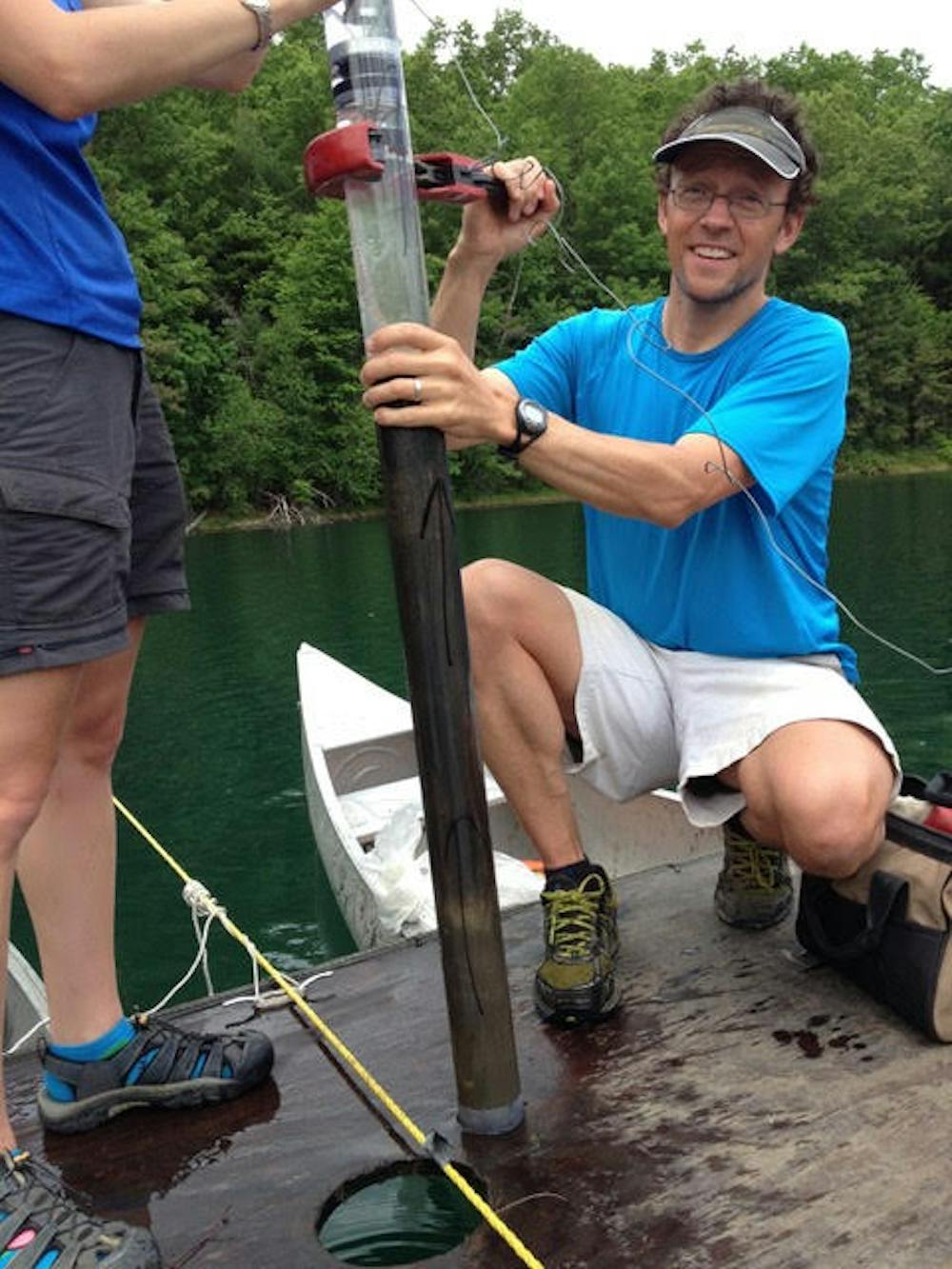
In the field of paleo-ecology, researchers take advantage of the fact that, over time, the bottoms of lakes and ponds fill up with mud. Using a hand-driven device, scientists can collect a cylindrical core of the sediment and then use radiocarbon dating to determine the age of the mud at different depths. Over the last century, scientists have collected sediment cores from hundreds of lakes around the world, enabling them to reconstruct past environments and ecosystems.
Paleo-ecologist Bryan Shuman collecting a sediment core from Green Pond, central Massachusetts.Wyatt Oswald, CC BY-ND
Our team of paleo-ecologists and archaeologists collected sediment cores from 23 ponds across southern New England. We analyzed ancient pollen grains, fragments of charcoal and clues about past water depth, all preserved in the mud, allowing us to create a record of vegetation, fire and climate over thousands of years.
Our study contradicts the theory that people had significant ecological impacts in southern New England before European arrival. Instead, it reveals that old forests, shaped by climate change and natural processes, prevailed across the region for thousands of years.
Native populations in southern New England peaked at two times during the last several millennia: 5,000-3,000 years ago, during what archaeologists call the Late Archaic Period, and 1,500-500 years ago, a period known as the Middle-Late Woodland. During those times when Native populations were relatively high, we found no evidence for forest clearance, elevated use of fire, or widespread agriculture. Interestingly, fire activity was high only 10,000-8,000 years ago, a period that was substantially drier than today, with low human populations.
Of course, the indigenous people of New England utilized and relied on a wide variety of natural resources: they hunted, fished, foraged, and cultivated some edible plants. Pre-Colonial societies were complex, widespread and large, with populations in the tens of thousands. But the evidence suggests they didn’t use fire to open large swaths of the landscape for agriculture. Rather, over more than 10,000 years, these highly adaptable people shifted activities seasonally across the landscape, taking advantage of a wide range of resources and exerting limited, and most likely very localized, ecological impacts overall.
From dense forests to more open land
So, if Native Americans didn’t clear forests and create open lands across southern New England, how and when did the grasslands, shrub lands and open forests in existence today originate?
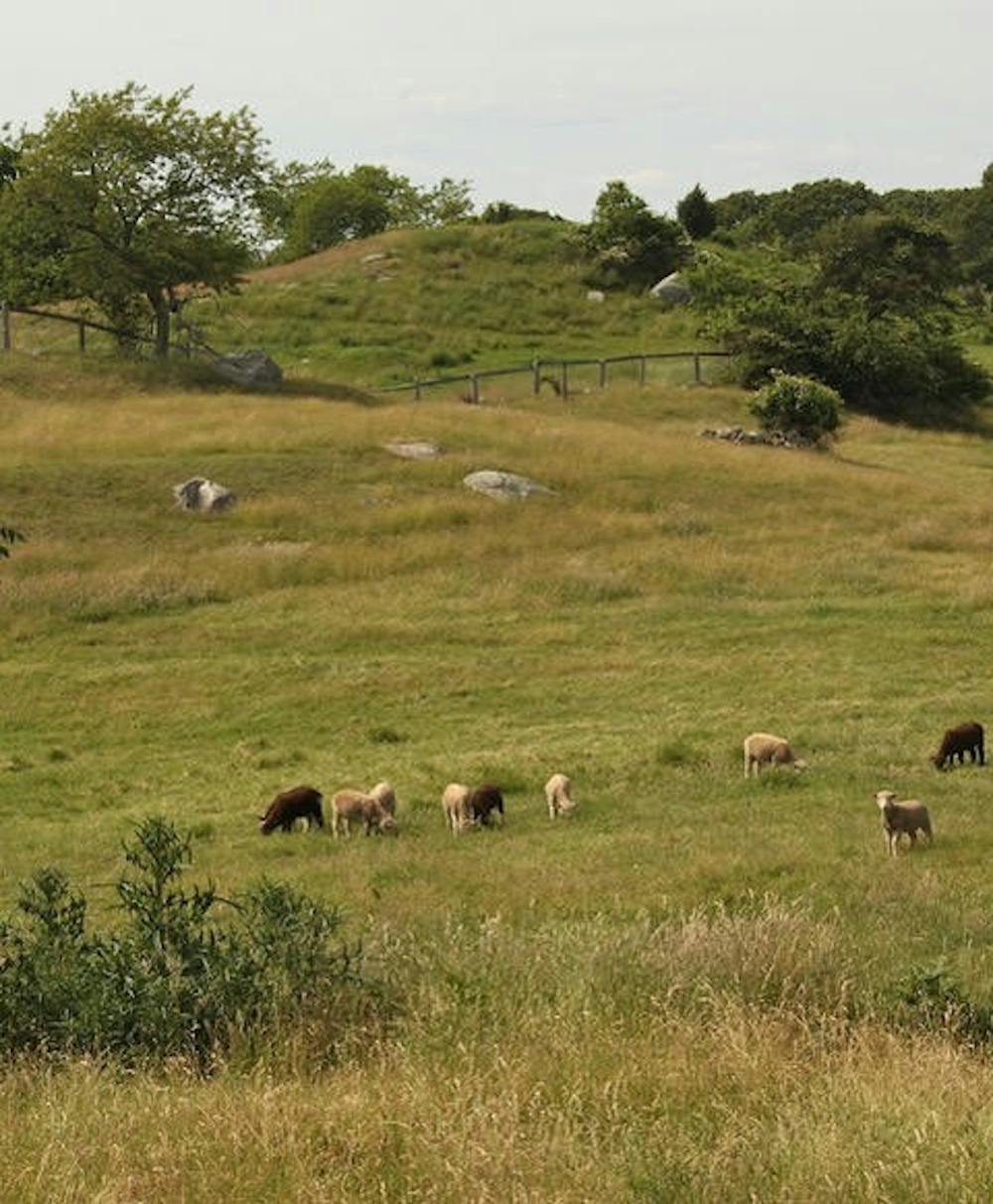
When we analyzed the mud in our study ponds, we found the obvious signature of forest clearance by 17th-century European colonists. Pollen from forest species declined, while pollen from agricultural and weedy species, like ragweed, increased abruptly. This evidence clearly shows New England’s open land habitats owe their existence to Colonial European deforestation and agriculture, especially sheep and cattle grazing, hay production, and orchard and vegetable cultivation in the 18th and 19th centuries.
Sheep grazing on Martha’s Vineyard.David Foster, CC BY-SA
This retrospective research should cause some conservationists to reconsider both their rationale and tools for land management. If the goal is to emulate the conditions that existed prior to the arrival of Europeans, land managers should allow New England forests to mature with minimal human disturbance. If the goal is also to maintain biodiverse open land habitats, like Montague Plains, within the largely forested landscape, managers should apply the Colonial-era agricultural approaches that created them nearly 400 years ago. Those tools would include mowing, grazing and cutting woody vegetation – but not burning.